

There is a particular kind of exhaustion that arrives in midlife that we don’t talk about nearly enough. It looks like taking a work call from a hospital waiting room. Filling out aged-care paperwork after dinner. Checking on an elderly parent while worrying about a teenager. Turning down a promotion because there is simply nowhere else for the hours to come from. And somewhere in the middle of it all, trying to earn enough money to keep your own life afloat.
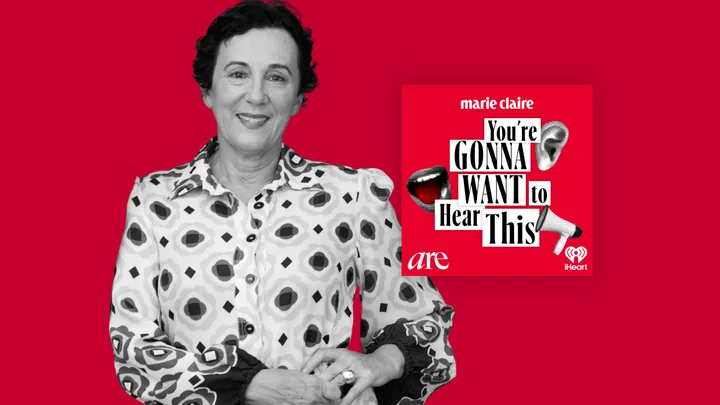
Broadcaster, journalist, bestselling author and founder of Club Sandwich Sarah Macdonald has a name for it: the “midlife collision”. Speaking to marie claire editor Georgie McCourt on the latest episode of You’re Gonna Want To Hear This, Macdonald opened up about spending around 15 years as part of the “sandwich generation” – adults simultaneously caring for ageing parents while continuing to support their own children. And while much has been said about the emotional toll of caring, Macdonald says there is another price women are paying: a significant financial one.
“There is a huge economic cost from being in the sandwich generation,” she says. “There’s the lost hours of work, the stepping back, the not going for those pay rises in those other jobs, people leaving work for a while, taking unpaid leave.” For Macdonald, that impact is personal. When her children were younger, she worked for herself for years because the traditional structure of a media career simply didn’t fit around family life. Later, she returned to radio and shift work, which offered some flexibility as she also took on increasing responsibility for her parents. But flexibility came with compromises.
Listen To You’re Gonna Want To Hear This
Macdonald says many women in the same position find themselves choosing work that fits around caring rather than work that reflects their ambitions. “They won’t go for that promotion. They will possibly go part-time,” she says. “You have to do what makes it work for you, but that is an impact on your career. There’s an impact on your superannuation.” It is a point that immediately resonated with McCourt, who revealed during the conversation that after leaving a full-time media job when her children were young and running her own business for eight years, she didn’t pay herself superannuation during that period. “It’s not easy to catch up,” McCourt says. Macdonald agreed, revealing that rebuilding her own super was one of the reasons she eventually returned to full-time employment.
Then she put a startling hypothetical figure on the value of the work she has done outside her paid career. “I made a joke with my family one day,” she says. “If you paid me for all the hours I’ve done over the last 15 years, like, between half a million and a million bucks would be great.” While it might have been delivered with Macdonald’s trademark humour, the point behind it is anything but funny.
The episode notes that Australia’s unpaid carers contribute an estimated $77.9 billion worth of care each year, with women doing the majority of that work. More than 2.8 million Australians provide unpaid care – an enormous workforce operating largely outside the formal economy. And unlike maternity leave or childcare, the demands can arrive unpredictably and continue for years.
Macdonald says today’s sandwich generation is facing a fundamentally different reality to previous generations: people are living longer, Australians are having children later and most households depend on adults remaining in paid employment. “When you’re in the sandwich generation now, it goes on for an average of 12 years because people are living longer,” she says. “I’m up to 15 years.” For many women, those are also the critical years in which they would otherwise be reaching the peak of their careers, increasing their salaries and building retirement savings.
The problem is compounded by the fact that many don’t even identify themselves as carers. Macdonald points out that a worker may feel comfortable telling their boss they need time away for a child’s school event, but far less comfortable announcing they need to accompany their mother to a knee operation. That invisibility matters. Macdonald says workplaces are beginning to notice women disappearing or stepping backwards at a certain point in their careers and asking why. Increasingly, the answer is care. And with Australia’s population ageing, Macdonald argues this is no longer an issue that can be dismissed as an individual family responsibility. “No one talks about us. No one cares about us,” she says of the sandwich generation. “See us, hear us, hear us roar. We don’t have time to roar, so I’ll roar for you.”
Her message is not that caring is without joy. Throughout the conversation, Macdonald speaks movingly about the privilege of looking after the people who once looked after us. But love does not cancel out labour. And gratitude does not replace income, superannuation or career progression. Asked what she would change about the way Australia treats unpaid carers, Macdonald’s first request is strikingly simple.
“Just thank them,” she says. “Acknowledge the unpaid work, the incredible way that they hold up the entire system.” Because for millions of Australians – and disproportionately, women – care may be given freely. But it is certainly not free.
Listen to Sarah Macdonald’s full conversation on marie claire’s You’re Gonna Want To Hear This, available wherever you get your podcasts and on the marie claire Australia YouTube channel.

Related stories

Native ad body.

Native ad body.



Native ad body.



Share this post